

Your First Amazon Product's Margin After the New-Seller Credits End
By Archit Mathur · Published · Last updated
Short answer
On a first branded FBA product, Amazon's new-seller credits take up to ten percentage points off the referral fee, for 200 units under the New Selection Program (2026) or up to a year under New Seller Incentives. When they stop, one $17.99 beauty product's break-even ACoS falls from 58.5% to 48.5%. Set price and bids on the post-credit number.
If your first branded product went into FBA in the last year, the profit it shows in its first months may include credits that stop at a set unit count or date. A UK seller who posts a monthly breakdown of one product priced under £10 put the caveat at the top of their post of 13 September 2026 (opens in a new tab): “I'm still on New Seller Incentives so I'm paying no referral fee at all this month. That's doing a lot of work in this profit number.” By their own arithmetic, the end of the incentive takes the month's £3,178 to “roughly £2,453, and 35% margin becomes about 27%.”
The US store has two programmes that do this, each with its own end point. This page was written on 21 October 2026 and uses their terms as they stood on that date.
Two programmes that do not stack
New Seller Incentives (opens in a new tab) are for new Professional sellers. Amazon's FBA page (opens in a new tab) says “All new Professional sellers” get its fulfilment credits: $100 off inbound shipments through the Amazon Partnered Carrier program, a $400 credit for inbound placement costs, and free storage and customer returns through automatic enrolment in FBA New Selection. The referral-fee part, the Brand Representative Bonus (opens in a new tab), also requires you to be the brand's first owner and to enrol it in Brand Registry before, or within six months after, your first buyable ASIN in the US store. Its credits, Amazon says, “apply as a referral fee discount” of 10% of the price of eligible branded sales on the first $50,000 and 5% on the next $950,000, or $52,500 at most, for up to a year.
The New Selection Program (2026) (opens in a new tab) is for a branded product that is new to FBA. Amazon's announcement sets no account-age condition and addresses sellers already enrolled in the earlier version. From the date the product's first inventory is received, it gives fee credits equal to capping the referral fee at 10% on the first 100 units and at 5% on the next 100, or at your category rate if that is lower. You can use the credits against “major fees, like referral and fulfillment fees.” The programme also makes storage, customer returns and liquidations free on the first 200 units for 120 days, with 45 more days for sellers using the Vine Pre-launch service. Replying in a thread opened on 23 June 2026 (opens in a new tab), an Amazon community manager said the seller must have Brand Registry ownership or an authorised role with the brand.
Amazon's announcement says New Selection benefits “don’t stack with New Seller Incentives. If eligible for both, New Seller Incentives benefits will be applied first.” Sellers enrolled in the earlier New Selection Program receive the 2026 version automatically for new branded FBA ASINs that launch from 30 July to 31 October 2026, and have to confirm enrolment on the Enroll in New Selection Program (2026) page to keep receiving it after 31 October.
| New Seller Incentives | New Selection Program (2026) | |
|---|---|---|
| Who | A new Professional seller. The referral credit also needs Brand Registry within six months of the first buyable ASIN, as the brand's first owner | A branded product new to FBA, with Brand Registry ownership or an authorised role |
| Referral fee | Credits as a referral fee discount: 10% of the price of eligible branded sales on the first $50,000, 5% on the next $950,000 | Credits equal to capping it at 10% on units 1 to 100 and 5% on units 101 to 200, or the category rate if lower |
| When the referral credit ends | One year after eligibility, or at $52,500 in credits | After unit 200 |
| Storage, customer returns, liquidations | Storage and returns through automatic enrolment in FBA New Selection, which Amazon's FBA page calls the 2026 programme | Free on the first 200 units for 120 days, plus 45 days with Vine Pre-launch |
| Low-inventory-level fee and storage utilization surcharge | Exempt for one year after FBA inventory is first received | Exempt on the first 200 units for 120 days |
| Inbound | $400 credit for inbound placement costs and $100 off inbound shipments through the Amazon Partnered Carrier program | None listed |
Amazon's two pages word a 90-day condition differently. The New Seller Incentives page says to send eligible products in “within 90 days of listing”. The FBA page says you are enrolled in New Selection when you “create an FBA shipment within 90 days of listing your first buyable product.” On the FBA page's wording, a product listed months after your first may fall outside it, so check the FBA New Selection dashboard before you plan around the credits.
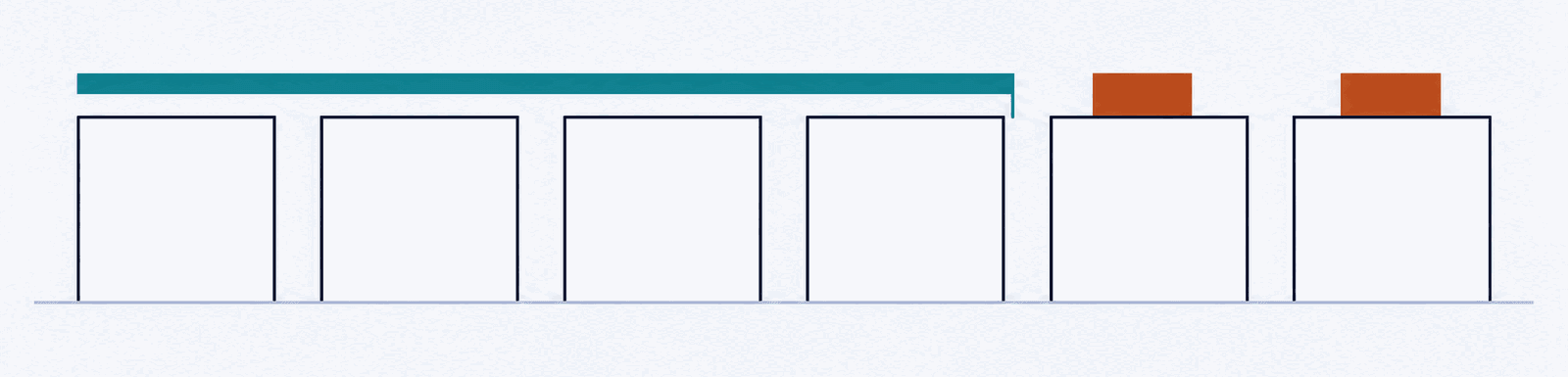
One $17.99 unit, with and without the credits
A US seller posted these figures on 6 October 2026 (opens in a new tab), about three weeks after launching a beauty product: “Listed at $17.99. COGS is $2.70 landed, FBA + referral fees are $6.56, so about $8.73 profit per sale before ads.” Beauty, Health, and Personal Care charges 15% of the whole price above $10 (opens in a new tab), which is $2.70 at $17.99, so $3.86 of their $6.56 is the fulfilment fee. The table below keeps their other figures and changes only the referral fee you pay in each credit phase.
| Phase | Net referral fee after credit | Profit before ads | Break-even ACoS |
|---|---|---|---|
| New Selection, units 1 to 100 | $1.80 | $9.63 | 53.5% |
| New Selection, units 101 to 200 | $0.90 | $10.53 | 58.5% |
| Brand Representative Bonus, first $50,000 of branded sales | $0.90 | $10.53 | 58.5% |
| Brand Representative Bonus, next $950,000 within the year | $1.80 | $9.63 | 53.5% |
| No credit: unit 201 on, or after the bonus year | $2.70 | $8.73 | 48.5% |
Under New Selection the best hundred units are the second hundred, and at unit 201 the referral fee goes from 5% to 15% of the price in one step. Under the Brand Representative Bonus, $50,000 is about 2,780 units at this price, so if this is the brand's only product and it sells fewer than that in its first year, it goes straight from the 58.5% row to the 48.5% row when the year ends.
Break-even ACoS, with and without the credit
Break-even ACoS is the share of an ad-driven sale's price you can spend on clicks before that sale loses money. It equals profit before ads divided by price. The seller above wrote “Break-even for me is about 48% ACOS”, which is the no-credit row.
Take a campaign running at 50% ACoS. At $17.99 it spends $9.00 in ad cost for each sale it drives. While the 5% cap applies, each of those sales still clears $1.53. From unit 201, with the same bids and the same conversion rate, each one loses 27 cents.
The UK seller measured the same gap on their own account in a comment on 14 August 2026 (opens in a new tab): “Currently with New Seller Incentives my breakeven ACOS is 72.96% and without Incentives it is around 63.34%.” Their campaigns were running at 47%, below both. A launch whose ACoS sits between the two is profitable only while the credit lasts.
The other fees with an end date
A small-batch plan runs into the low-inventory-level fee once the exemption in the table ends. Someone planning a first product asked on 12 August 2026 (opens in a new tab) how small a start can be: “I'm talking like 10 units, 15 units, putting like $200 or $300.” An Amazon moderator, Jameson_Amazon, said in June 2024 (opens in a new tab) that the fee is charged when historical days of supply is under 28 days on both the 30-day and the 90-day measure. Restocking in batches that each cover about two weeks of sales keeps a product under 28 days of supply. After the exemption, Amazon charges the fee per unit while supply stays low, at rates it publishes only inside Seller Central.
Neither programme names the 3.5% fuel and logistics surcharge or holiday peak fulfilment fees. Amazon charges the surcharge on fulfilment fees (opens in a new tab), at an average of $0.17 a unit for US FBA. Peak fees run from 15 October 2026 to 14 January 2027 (opens in a new tab) at an average of $0.32 a unit above non-peak rates, and the surcharge applies on top. Your own figures for both are in the Revenue Calculator and the Fee and Economics Preview report, which Amazon updated for each.
Price lines where the referral fee jumps
Several categories set the referral rate on the whole price, not on the part above a line. Beauty, Health, and Personal Care and Baby Products (opens in a new tab) charge 8% at $10.00 or less and 15% above it. Grocery and Gourmet does the same at $15.00. Clothing and Accessories charges 5% up to $15.00, 10% up to $20.00 and 17% above. At $9.99 a beauty product pays 80 cents in referral fee; at $10.99 it pays $1.65, so 85 cents of the extra dollar goes to the referral fee.
The fulfilment fee can step at nearly the same price. Replying in a Seller Forums thread opened on 24 November 2025 (opens in a new tab), the Amazon moderator Glenn_Amazon wrote that, “Based on my understanding of this program,” the 2026 US Low Price FBA fulfillment fee “will apply to any product that is charged under $10 if the ASIN is eligible.” The referral table says $10.00 or less and the moderator says under $10, so on those two wordings a $10.00 beauty product keeps the 8% referral rate and misses the low-price fulfilment rate.
The UK seller checked both steps on their own listing (opens in a new tab) and posted the result on 17 August 2026. In Amazon's Revenue Calculator, moving a £9.99 health product to £10.99 took the referral fee from £0.80 to £1.65 and the FBA fulfilment fee from £1.52 to £1.90. They added: “My referral fee is currently waived under the new seller incentive. Once that ends, pricing at £10.99 would leave me 43p per unit worse off than £9.99 before I lose a single sale to the higher price.” A referral credit hides some or all of this step, because the fee that jumps is the one being credited.
Fees charged in full despite a credit
A credit has to be on the account before the fee it is meant to cover. A new seller posted on 13 August 2026 (opens in a new tab) that a shipment was charged the full inbound placement fee, and quoted Amazon support's reply: “Credit amounts may take at least 10 days to be issued to your account before they can be applied toward future relevant fees. The inbound placement fee credits officially posted to your account on 2026-05-20 06:10:36, whereas your shipment was created on May 10, 2026. Therefore, full placement fees will be charged for this shipment!”
Sellers have also posted about a $200 Vine enrollment fee charged in full while they were eligible for a New Seller Incentives Vine credit, in threads from 12 June (opens in a new tab), 26 August (opens in a new tab) and 19 September 2026 (opens in a new tab). In the August thread, the seller wrote that support “has confirmed I have a $200 New Seller Incentives Vine credit on my account, but says it can't be applied to this charge.” A seller enrolled in the New Selection Program (2026) posted on 10 October 2026 (opens in a new tab) that they were charged $3.32 in September storage fees on 7 October, despite free storage on the products concerned.
Check each credited fee against its credit
Before you create a shipment or enrol a product in a paid programme, check in Seller Central that the matching credit shows as available. After each settlement, compare the inbound placement, storage and Vine lines in the Transaction View with the credits you expected, and open a case for any line charged in full, giving the date the credit posted and the date of the charge.
Before you place your next reorder, run the product through the Revenue Calculator at its full referral rate and set your bids against the margin it gives you.
Frequently asked questions
Do New Seller Incentives and the New Selection Program (2026) stack?
No. Amazon's announcement of 17 June 2026 says New Selection Program (2026) benefits don't stack with New Seller Incentives, and that a seller eligible for both gets New Seller Incentives first. New Seller Incentives also enrol eligible new-to-FBA products in FBA New Selection for free storage and customer returns.
Does the Brand Representative Bonus cover the whole referral fee?
Its credits apply as a referral fee discount of 10% of the price of eligible branded sales on the first $50,000, then 5% on the next $950,000, for up to a year. In a 15% category that leaves 5% of the price to pay on the first $50,000. In an 8% category the credit is larger than the fee on each sale; Amazon does not say what happens to the difference.
Who can use the New Selection Program (2026)?
Amazon's announcement of 17 June 2026 describes it as a programme for eligible branded products that are new to FBA, with benefits counted from the date the first inventory is received, and sets no account-age condition. An Amazon community manager, replying in a thread opened on 23 June 2026, said the seller must have Brand Registry ownership or an authorised role with the brand.
What changes at unit 201 under the New Selection Program (2026)?
The referral fee credit ends, so a product in a 15% category goes from paying 5% of the price, net of the credit, to 15%. Free storage, customer returns and liquidations, and the exemption from the low-inventory-level fee and the storage utilization surcharge, also cover the first 200 units only, for 120 days from first receipt plus 45 days with the Vine Pre-launch service.
Do the new-seller credits cover the 3.5% fuel and logistics surcharge?
Neither programme names it. The New Selection announcement says its credits "apply to major fees, like referral and fulfillment fees", and the credit is sized by the referral fee. Amazon has charged the surcharge on fulfilment fees since 17 April 2026, at an average of $0.17 per unit for US FBA, and on top of peak fees from 15 October 2026 to 14 January 2027.
What changes for New Selection after 31 October 2026?
Amazon's announcement of 17 June 2026 says sellers already enrolled in the earlier New Selection Program receive the 2026 benefits automatically for new branded FBA ASINs that launch from 30 July to 31 October 2026, and must confirm enrolment on the Enroll in New Selection Program (2026) page to keep receiving them after 31 October.
Sources
- 01New Seller Incentives (opens in a new tab) — Amazon (sell.amazon.com)
- 02Amazon FBA (Fulfillment by Amazon) (opens in a new tab) — Amazon (sell.amazon.com)
- 03
- 04
- 05
- 06Selling fees: selling plans and referral fees by category (opens in a new tab) — Amazon (sell.amazon.com)
- 07
- 08
- 09Fuel and logistics-related surcharge: FBA, MCF, and BWP in US and CA (opens in a new tab) — Amazon Seller Forums
- 10Holiday 2026: Same fees, same eligibility, earlier deadlines (opens in a new tab) — Amazon Seller Forums
- 113 weeks into my Amazon launch (beauty/personal care, $17.99): ads at 87% ACOS, ~7% conversion. What would you change? (opens in a new tab) — r/AmazonFBA, u/Maleficent_Block_997, 6 October 2026
- 12£3,178 net profit from £9,072 revenue in August. Full breakdown, plus a correction to what I said last month (opens in a new tab) — r/AmazonFBA, u/jayeshchauhanreddit, 13 September 2026
- 13Comment on "£2,864 to launch my first Amazon UK brand. 10 months later it's done £35,360 (screenshot)" (opens in a new tab) — r/AmazonFBA, u/jayeshchauhanreddit, 14 August 2026
- 14I put my price up by £1 in Amazon's own calculator. My fees went up by £1.42. (opens in a new tab) — r/AmazonFBA, u/jayeshchauhanreddit, 17 August 2026
- 15Short and simple: how small can you start? (opens in a new tab) — r/AmazonFBA, u/Extension_Stomach688, 12 August 2026
- 16New seller benefits: Configuration fee usage issues (13 August 2026) (opens in a new tab) — Amazon Seller Forums
- 17
- 18
- 19Did not receive any incentive for new seller (19 September 2026) (opens in a new tab) — Amazon Seller Forums
- 20
notifcentral
Push alerts for Amazon sellers: FBA fee changes, Buy Box loss, listing issues, held funds, reimbursements and payouts.
Alerts
Compare
Guides
© 2026 Notifcentral